
croit v2607.0: Tentacle by default, S3 across sites, SMB rebuilt
With v2607.0, Ceph Tentacle becomes the release croit installs by default, S3 multisite arrives, and every new SMB gateway is built on a reworked Samba configuration with real ACL and idmap control.
Ceph Tentacle is the new default
New clusters install Ceph Tentacle. It is the release we support in production, and the one we recommend upgrading to: if you are still on Reef, skip Squid and go straight to Tentacle.
Tentacle is worth the upgrade on its own. The changes we expect you to notice first:
- Faster, leaner erasure coding. Tentacle ships the long-awaited FastEC work, a set of performance and space-amplification optimisations for erasure-coded pools, and new pools use the ISA-L plugin.
- A faster BlueStore. A new write-ahead log and improved compression, so the same hardware does more.
- Faster OMAP iteration across the cluster, most visible in RGW bucket listings and in scrub.
- Gentler resharding of large buckets. RGW does the resharding work before it blocks writes, which substantially cuts the client-visible impact on big buckets.
- Case-insensitive CephFS directories. Directory entries can be configured as case-insensitive or normalised, which matters for Windows and macOS clients sharing a tree.
- RBD live migration across clusters. An image on another Ceph cluster can be imported live, without a maintenance window.
This release ships Ceph Tentacle 20.2.2 in the enterprise images.
S3 multisite
croit now supports RGW multisite, so a bucket's data can live in more than one cluster. You configure a realm on the first cluster, hand its token to the second, and join that cluster as a second zone; RGW replicates between them from that point on, and both zones serve S3.
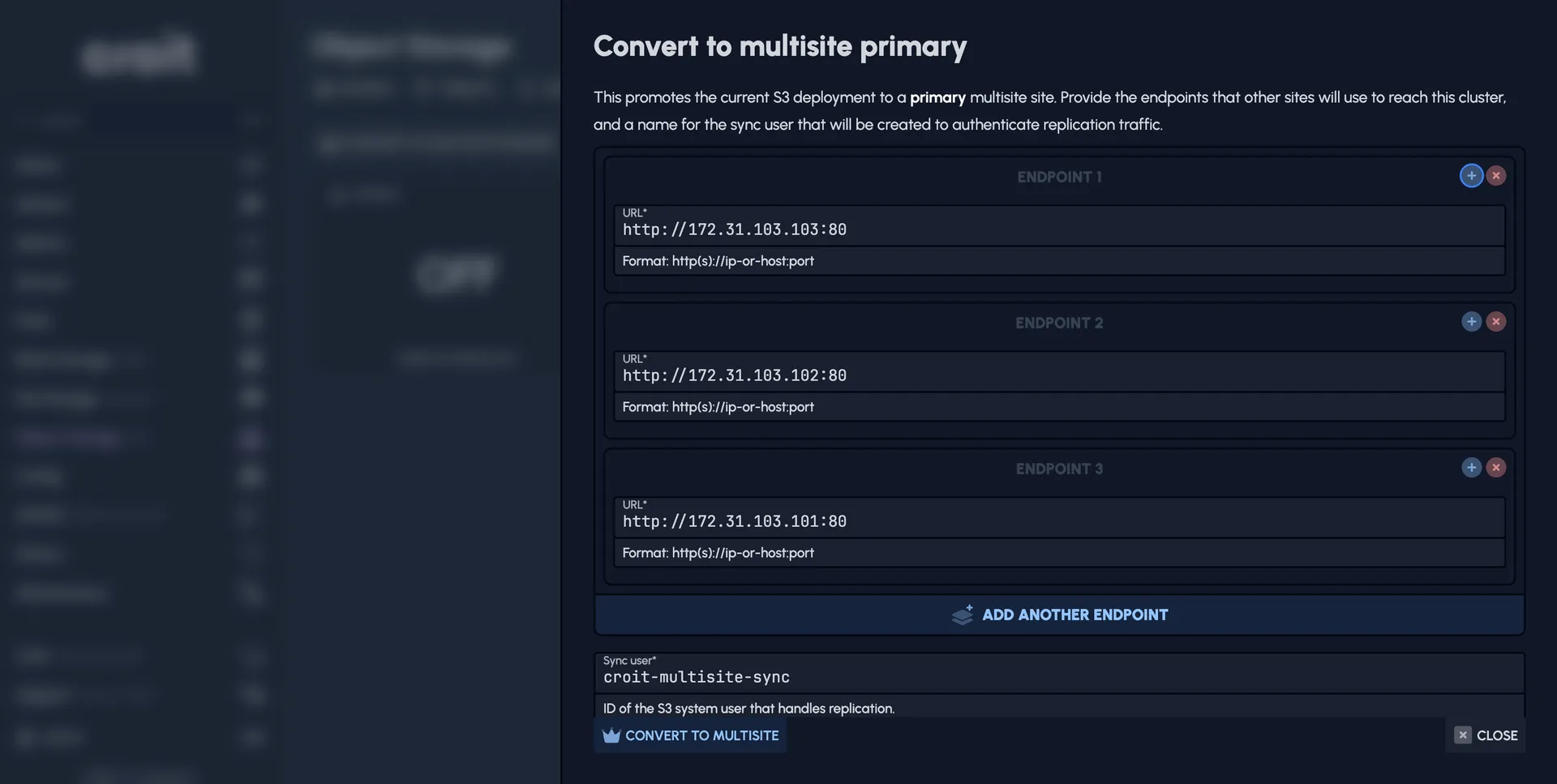
Each cluster shows where it stands in the realm: its role, whether metadata and data sync are caught up, when the last sync happened, and whether the zone is read-write or read-only. The full radosgw-admin sync status output sits one click below, for when you want per-shard detail.
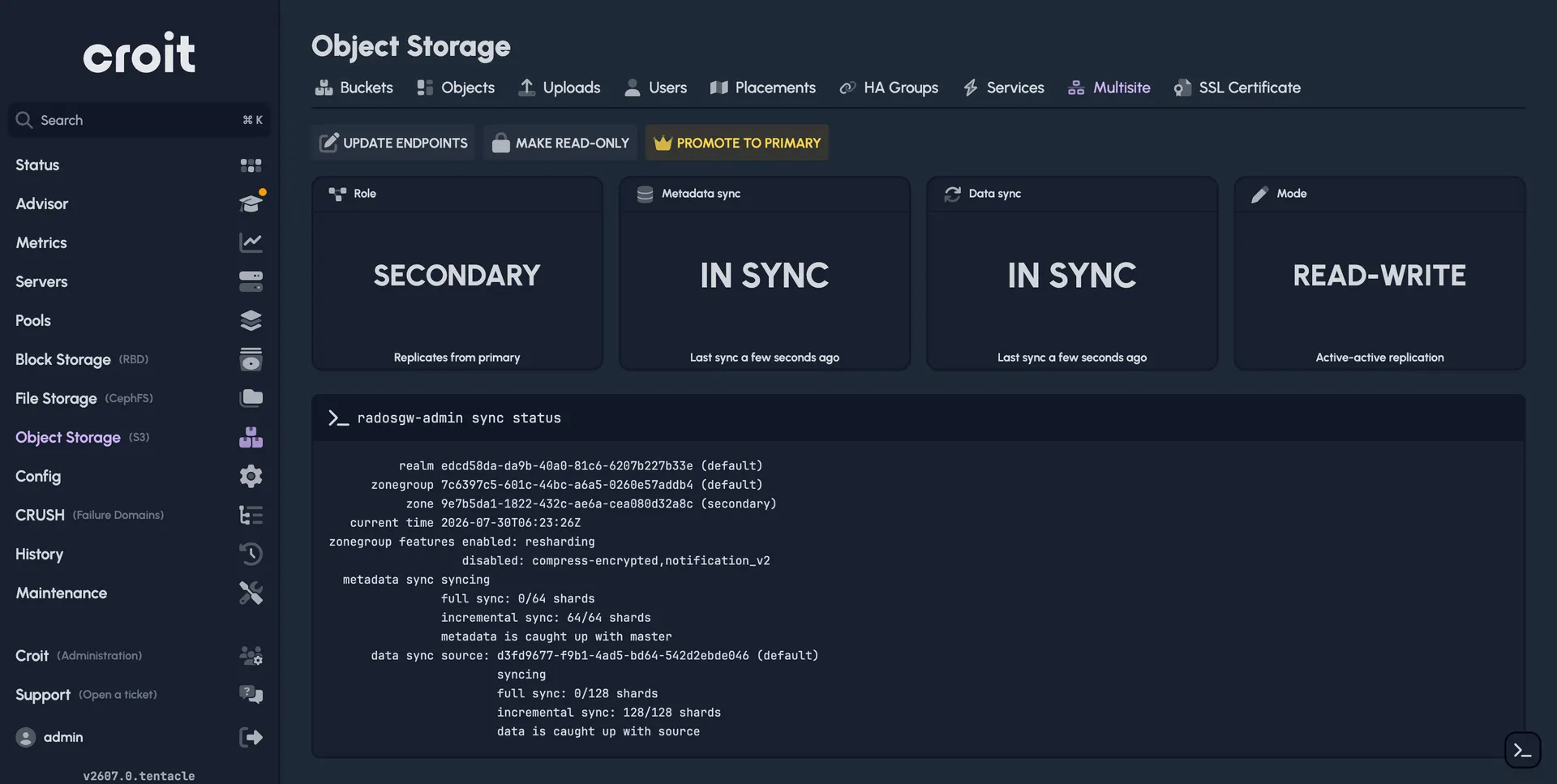
When a site is unavailable, you can promote the surviving zone from this same page, and hand the role back once the other side returns.
SMB gateways, rebuilt
New SMB gateways are created on a reworked Samba configuration, which brings several things under your control:
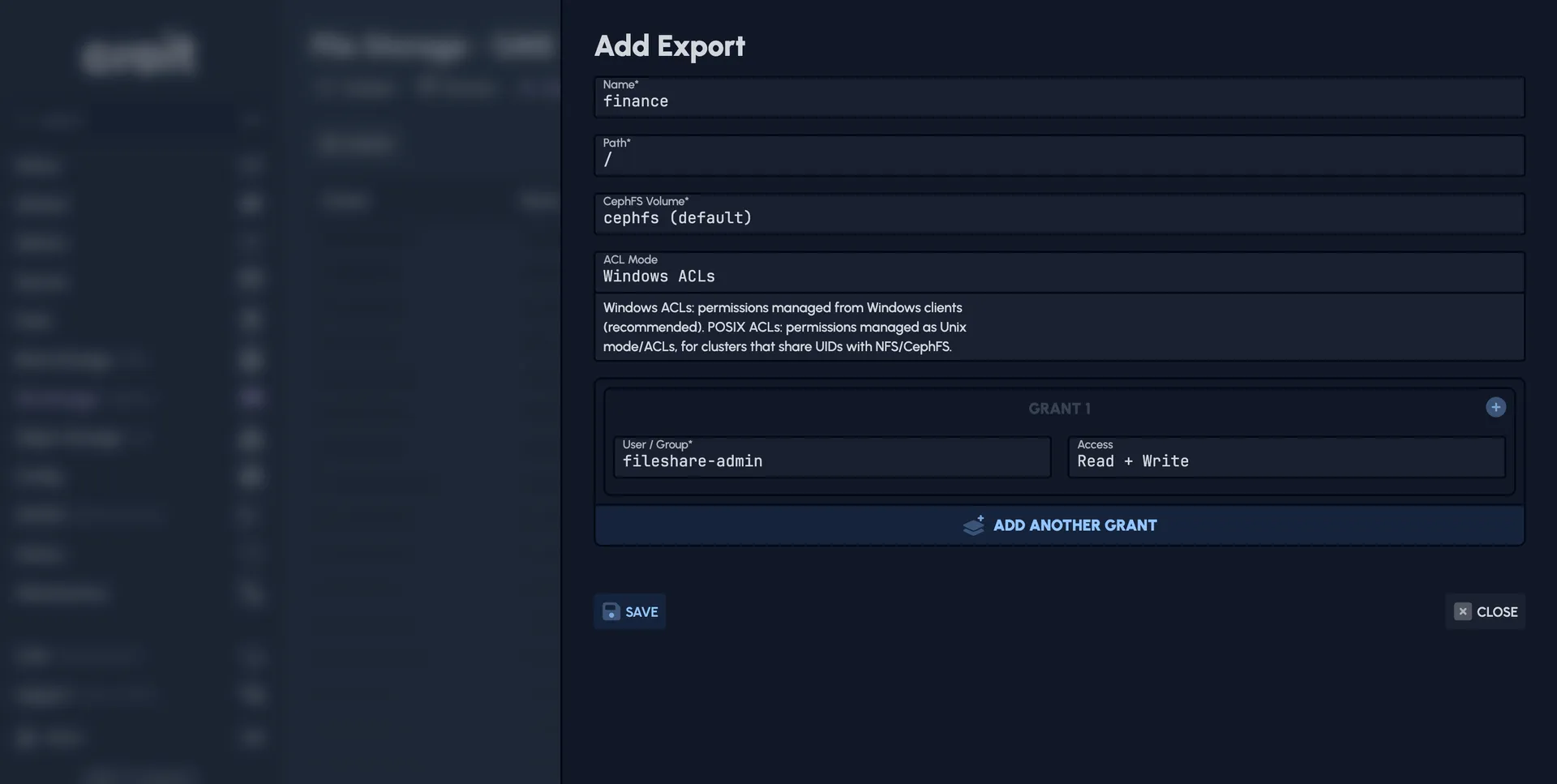
- ACL model per share. Choose POSIX or Windows ACLs for each share.
- Configurable idmap. Set the idmap ranges for an Active Directory gateway while you create it.
- Local users and groups. Gateways without Active Directory manage their own users and groups directly in the UI.
- Current CephFS module. File access goes through Samba's
vfs_ceph_new, the module upstream maintains today.
The ACL model is a per-share choice, made when you add the export: Windows ACLs for permissions managed from Windows clients, POSIX ACLs when the same tree is also reached over NFS or CephFS and the UIDs have to line up.
A gateway without Active Directory carries its own users. You create the first one while creating the gateway, and manage the rest under Users & Groups afterwards.
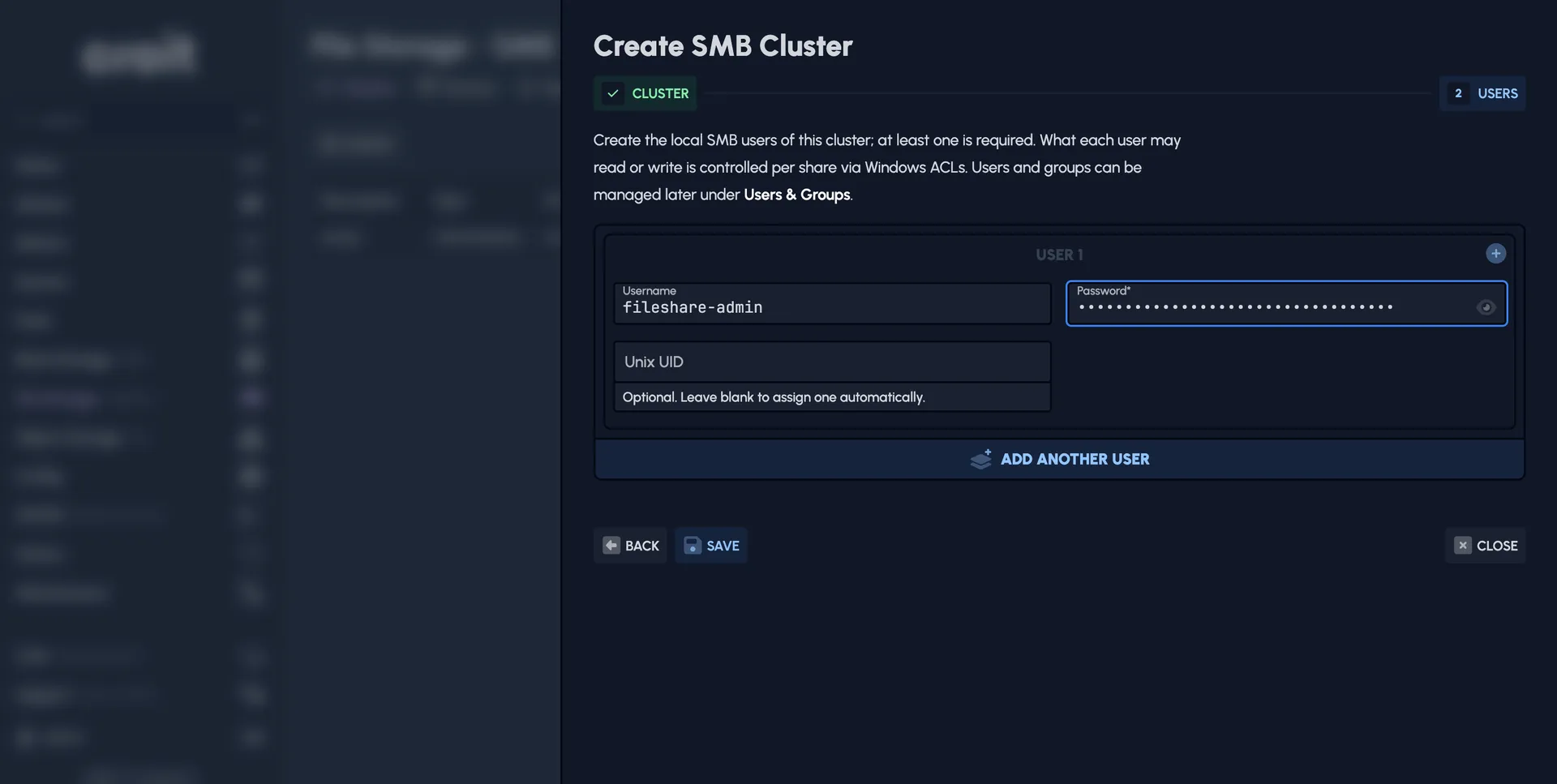
Existing gateways keep the configuration they were created with, so an upgrade changes nothing about how they serve their shares.
SMB and NFS on any CephFS filesystem
Pick the CephFS filesystem when you create an export or a gateway, and it is served from there. Separate filesystems keep their own MDS ranks, quotas and snapshots, so this is the clean way to hold tenants or workloads apart while still serving all of them from one cluster.
Persistent service state moved to RBD
The /persistent storage mounted on croit servers now lives on an RBD image instead of CephFS. Clusters will be migrated automatically to use the RBD image.
Clustered Samba keeps its CTDB recovery lock and its persistent database there, and CephFS turned out to be an unsound place for both: some clusters saw that database corrupt itself. Switching to RBD resolved these issues.
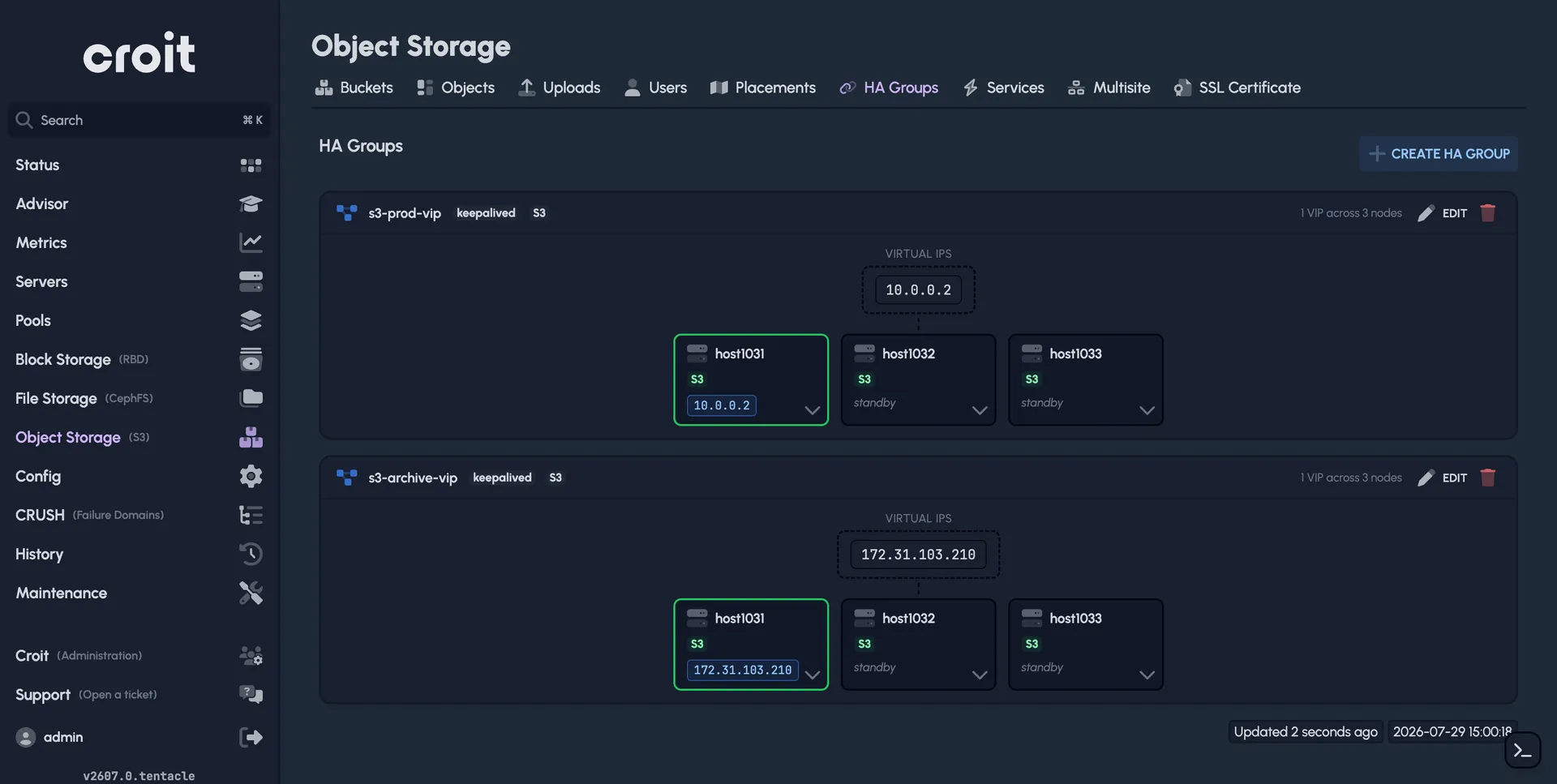
A high-availability view you can read
The HA group page has been redesigned to give a better overview of how the group is configured. You can now see how a VIP gets distributed and which node currently holds it.
Backups for air-gapped clusters
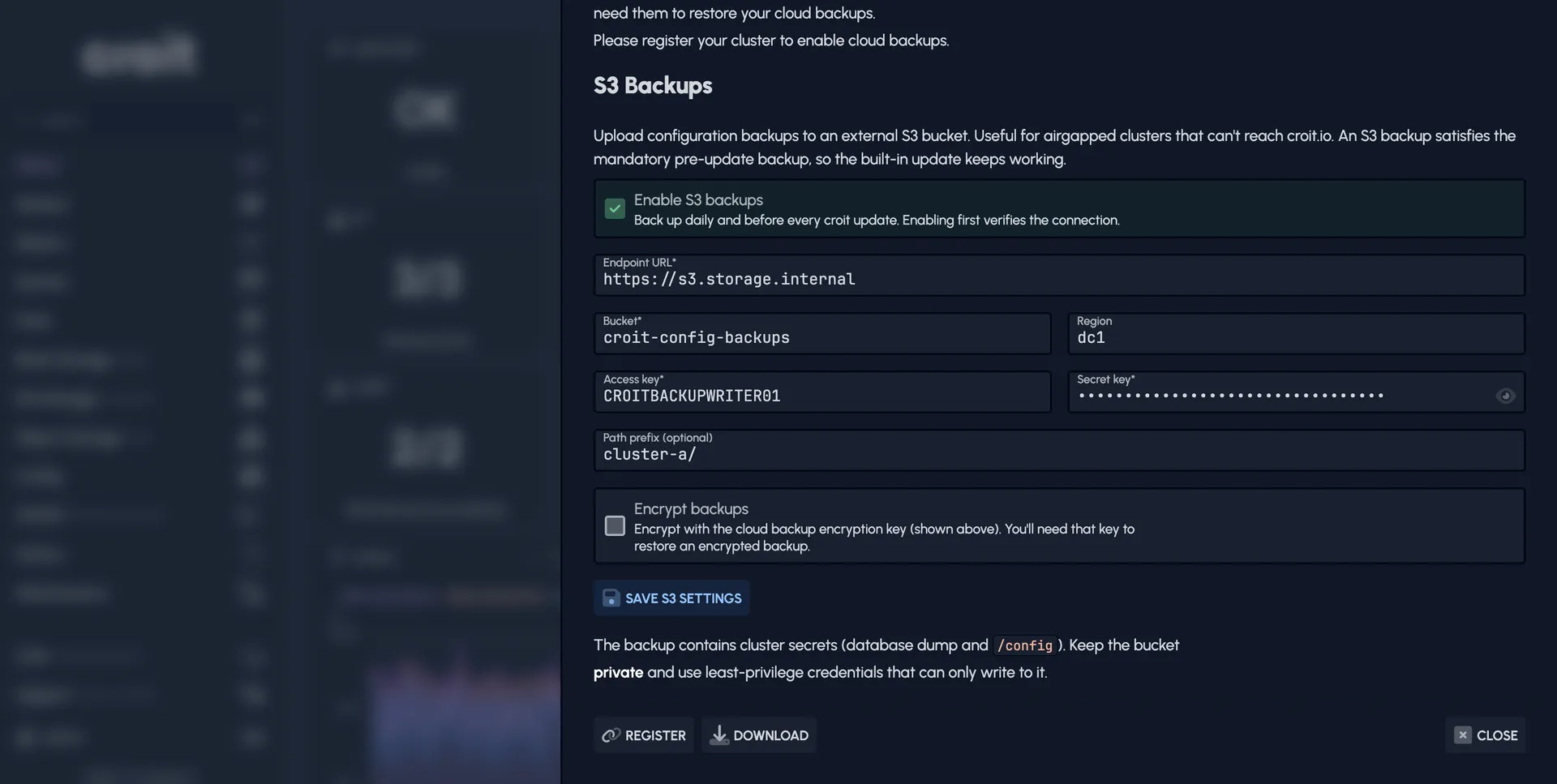
croit can now upload its configuration backups to an S3 bucket, daily and before every croit update. A cluster that cannot reach croit.io points its backups at storage it can reach instead, and since an S3 backup satisfies the mandatory pre-update backup, the built-in update keeps working. Enabling it verifies the connection first, and the backup can be encrypted with your cloud-backup key.
Also in this release
- Task Advisor findings can trigger hook scripts, with the finding's severity passed to the script.
- The S3 bucket and user lists are cached, which keeps those pages responsive on clusters with thousands of buckets.
- Browsing large CephFS directories with their statistics is much faster.
- The CephFS permissions dialog exposes the setuid, setgid and sticky bits.
- Enterprise images carry the latest Samba security patches.
24/7 premium support
Running croit in production? Our team is available around the clock for upgrades, capacity planning, and incident response.