
croit v2611.2: a FlashStore preview, static routes and an audit log
v2611.2 offers a first look at croit FlashStore OSD, croit's own OSD for NVMe disks, on test clusters running Ceph Umbrella. It also lets you set static routes in the croit UI, adds an audit log page, applies network changes without taking a server's other interfaces down, and keeps your custom config templates in step with croit's. The release notes carry the full list of changes.
FlashStore preview: croit's own OSD for NVMe disks
FlashStore is an alternative to Ceph's OSD, the daemon that stores data on one disk. croit built it to make full use of NVMe disks and the performance they offer. To the rest of the cluster it appears as an OSD like any other. Learn more about the ideas behind it on the FlashStore OSD page.
With v2611.2 you can try FlashStore yourself. Please note: it is meant for testing only and not ready for production yet.
To try it, set up a new test cluster on Ceph Umbrella. Install croit with the Umbrella container on your management node:
docker run --rm -it --pull=always \
  -v /var/run/docker.sock:/var/run/docker.sock \
  croit/croit:latest.umbrella /croit/bin/croit setup
The installation guide always has the current command.
Then choose the new Frontier OS image at the setup's Ceph Variant step. The Frontier image contains Ceph features that are still in active development.
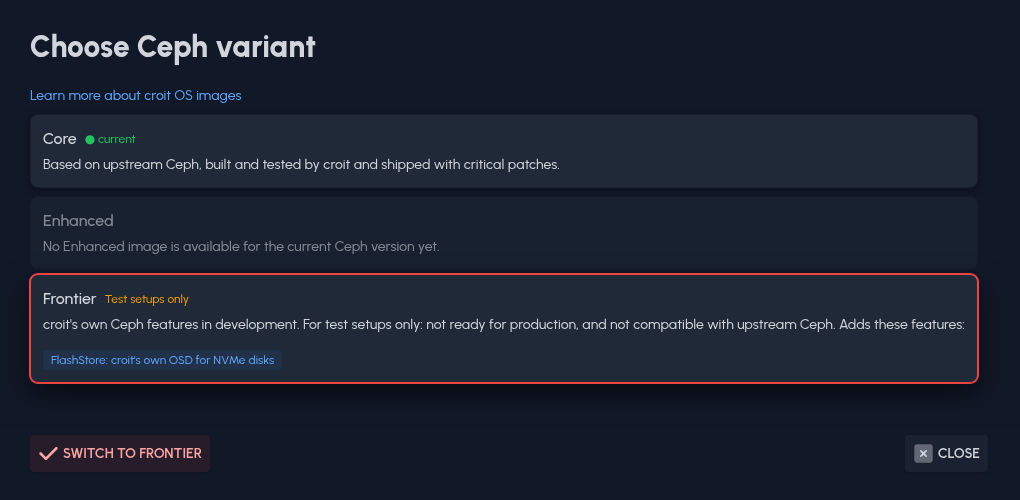
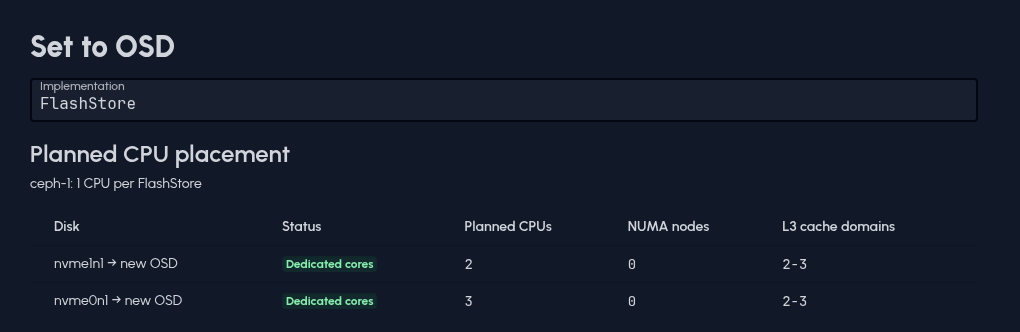
When you set an NVMe disk to OSD, choose FlashStore as its implementation. Try to turn every NVMe disk of a server into a FlashStore OSD at once: croit plans for all of them together and assigns CPU cores to each one.
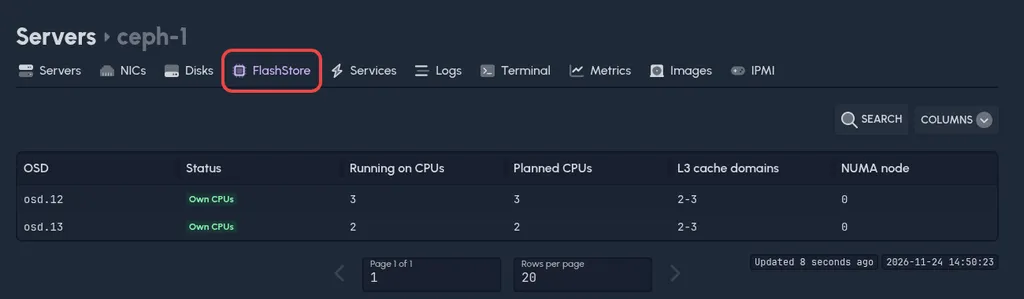
The server's new FlashStore tab shows where each FlashStore OSD runs, next to the cores croit planned for it, with warnings for misconfigurations.
New clusters on Ceph Umbrella
New clusters can now be set up on Ceph Umbrella 21.2.0, the newest Ceph major release. We don't consider Umbrella ready for production in croit yet, and recommend it only for testing FlashStore for now. Upgrading an existing cluster to Umbrella will follow in a later release.
Static routes in the croit UI
A static route sends traffic for a network your servers have no interface in through a gateway they can reach, for example when Ceph clients live behind a router. Until now you needed a hook script to configure that. You can now add routes for every server under Config > Networks, or for a single server on its NICs page. A static route on a server takes precedence over the networks configured in croit.
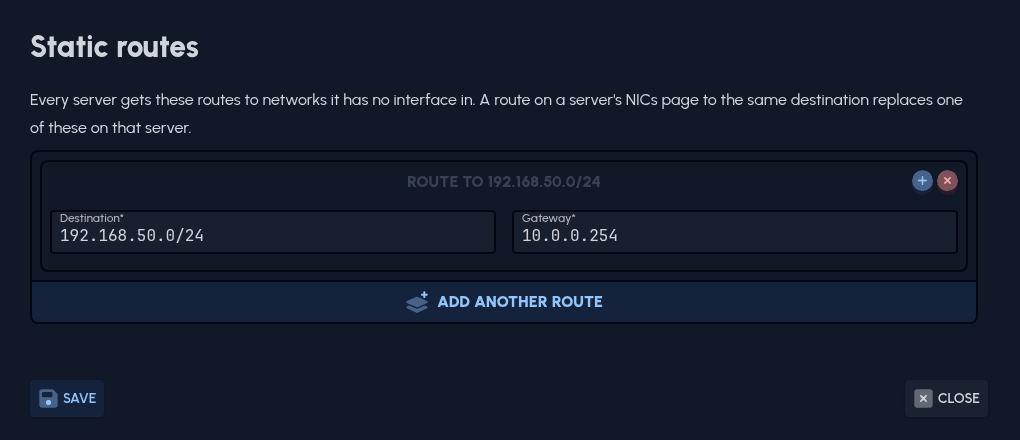
If you've used a hook script so far, remove it first, then add the same routes here. We plan to improve this feature based on what customers need, so let us know if you have feedback.
Learn more about static routes →
An audit log page
croit records all API requests in an audit log, including changes made in the croit UI and through the MCP server. Until now the audit log wasn't really accessible in the croit UI. The new History > Audit page, ported over from croit Datacenter Manager, lists these entries for admins.
croit lets you know when the audit log grows large, and you can set a retention period to prune older entries.
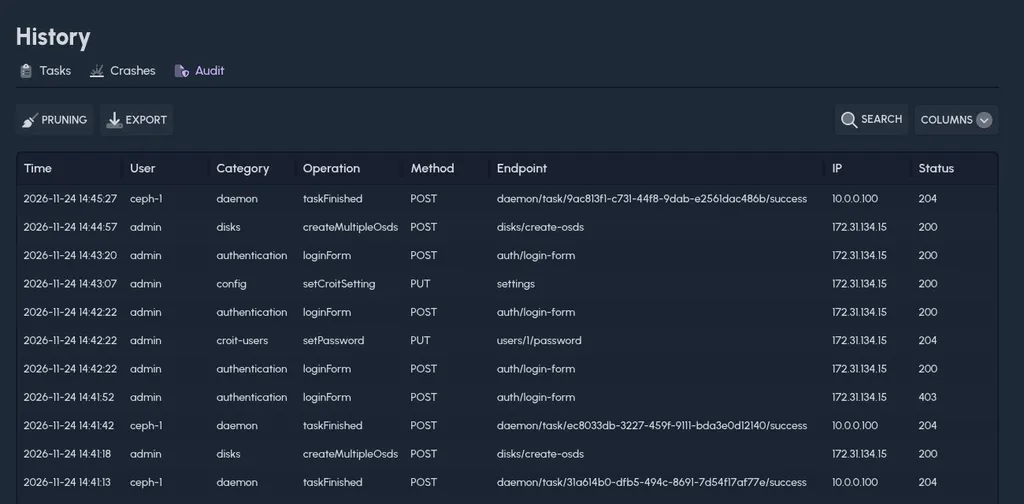
Learn more about the audit log →
Custom config templates that keep up with croit
croit generates the files your servers boot with from config templates, and you can customize them. A customized template used to stay as it was when croit updated it, so fixes and new features never reached it. croit now tells you when it updates a template you edited, and shows its changes next to yours so you can merge them.
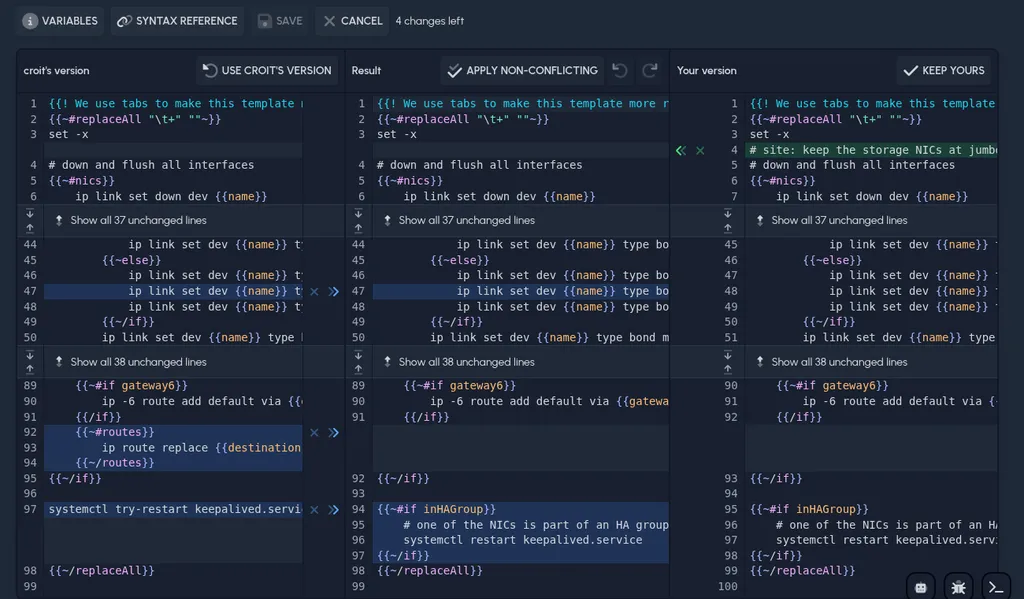
croit also warns you now if a template fails to render, for example because of a syntax error.
Also in this release
- LACP bonds have a Fast LACP rate option, on for new bonds, so a failed link leaves the bond within seconds.
- An HA Proxy can send S3 traffic to the RGW servers over a network you choose, instead of the PXE boot network.
- CephFS Guard can detect the removal of snapshots and changes to paths you configure, and offers new choices for what happens to a client after a detection.
- croit detects an IP conflict as soon as another device claims a server's address.
- Several smaller bug fixes. See the full changelog for details.
24/7 premium support
Running croit in production? Our team is available around the clock to help with upgrades, capacity planning and incidents.